Showing posts with label tamilnadu temples. Show all posts

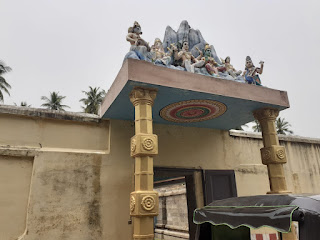
Valikeshwara Shiva temple of Batlagundu


Our country is gifted with a number of small and large temples of great antiquity. One such shrine which is very small temple but has a great history behind it is the Valikeshwara Shiva temple of Batalagundu.

It is located on the banks of Vegavati river (nowadays called Vaigai) near the town of Batalagundu, enroute Kodaikanal. It has all the aspects of a perfect Shiva temple - located away from the town, near a river and near a cremation ground on a slightly hilly terrain.


This temple is known for the Varuna japam puja which is conducted till date. This is a puja to pray to the lord for copious rains during drought or insufficent rains. Continous abhishekam is performed to the Shiva linga with water till the end of the japam. There are various rules for performing Varuna japam such as avoiding food with salt on the days of the japa.

This is a first hand experience of a person who witnessed the Varuna japam performed in 1930s - 40s  in this temple and we have given a verbatium translation - " In those days, agriculture was more important than what it is today. Whenever there was a drought or lesser than usual rains, the village elders would decide on doing the Varuna japam along with Rudram chanting. They would fast and come to the temple to start the pujas. One set of people will be performing the abhishekam to Shiva and another group would go the nearby Vaigai river and stand inside the water till their neck. It must be noted that in those times even when the rains were not enough there was never a time the river went dry. It was before the construction of the dam across vaigai (~1960). Standing inside the river waters the varuna japam would commence. It would go on for several hours. Finally after pujas completion, prasadam was served to all. The ghee flowing from the sweet pongal prasadam would make the entire hand oily. Then they would start returning back to their homes by walk and it would be closer to evening. Batlagundu village (or today's town) was nearly 5-6 kms away. Here is where the fun starts. The moment they step out of the area, rains would start. It was an custom not to use any umbrella or any other things which would prevent the rain water from falling on them. If they used an umbrella then the rains would stop. The rains would continue till late in the night."

It was the strong faith of our ancestors on the grace of Lord Shiva that such a thing could happen those days.


Initially, there was only a shrine for Lord Shiva. Recently, shrines for Ambaal and Lord Subramanya have been added. This temple is open only on Monday mornings and that too for only few hours due to the remote location of the temple.


Gajasamharamurti of Vazhuvoor


        Tamil Nadu has many unique groups of temples dedicated to various groups of deities. Among such groups dedicated to Lord Siva are the “Ashta Veera Sthanams” or “Atta Veerattanams” as they are commonly known. These eight temples are known as “Veera Sthanams” or sites of valour because Lord Siva is believed to have performed one valorous feat in each of these sthalams:

1.      Thirukkovilur – Andhakasura-vadha-murti – slaying the demon Andhaka

2.      Thiruvadhigai – Tripurantakamurti – destroying the three cities of three asuras

3.      Korukkai – Kamadahanamurti – burning Kamadeva or Manmatha with his third eye

4.      Kandiyur – Brahma-shirashchhedaka-murti – cutting of Brahma’s fifth head as Bhairava

5.      Thirukkadaiyur – Kalasamharamurti – saving Markandeya from Kala or Yama

6.      Thiruppariyalur – Virabhadra – destroying Daksha’s yajna

7.      Vazhuvur – Gajasamharamurti – slaying the rogue elephant

8.      Thiruvirkudi – Jalandhara-vadha-murti – slaying the asura Jalandhara

The Veeratteshwarar temple in Vazhuvoor, a village in the Kuthalam taluk of Mayiladuthurai district of Tamil Nadu, is believed to be the site where Lord Siva killed Gajasura, the elephant demon, and wore his hide as a shawl.

The Rudra Samhita of the Siva Mahapurana contains an account of the story of Gajasura’s defeat at the hands of Lord Siva (Section 5 - Yuddha Khanda, Chapter 57). Gajasura was the son of Mahishasura who was killed by Goddess Durga as Mahishasuramardini. Wanting to take revenge for his father’s death, Gajasura did severe penance to propitiate Lord Brahma and obtained a boon from the creator god, “I shall not be killed by any man or woman who is overwhelmed by kama or lust.” As is the case with most asuras of yore, Gajasura began to terrorise all the worlds, and made his way to the city of Kashi, the capital city of Lord Siva. All the devas sought refuge in the Three-Eyed Lord who proceeded to Kashi to vanquish Gajasura and protect his devotees. After a long and terrible battle, the Lord who had burned Kama pierced Gajasura with his trisula, thus fulfilling the criterion of the demon’s boon. Realising his folly, Gajasura propitiated Lord Siva before giving up his life and asked for two boons –

यदि प्रसन्नो दिग्वासस्तदा दित्यं वसान मे।।

इमां कृत्तिं महेशान त्वत्त्रिशूलाग्निपाविताम् ।।५८।।

yadi prasanno Digvāsas-tadā dityam vasāna me

imām kṛttim Maheśāna tvat-triśūlāgni-pāvitām (verse 58)

Oh Sky-Clad Lord! Oh Maheśāna! If it pleases you, please wear this hide of mine which has been purified by the fire of your trident.


अन्यं च मे वरं देहि यदि तुष्टोऽसि शंकर ।।

नामास्तु कृत्तिवासास्ते प्रारभ्याद्यतनं दिनम् ।।६३।।

anyam ca me varam dehi yadi tuṣṭo`si Śaṅkara

nāmāstu Kṛttivāsāste prārabhyādyatanam dinam (verse 63)

Oh Śaṅkara! If you are pleased, grant me one more boon. From this day onwards, may you be known by the name Kṛttivāsa, one who wears the (elephant) hide.

Thenceforth, the Krittivaseshwara temple became one of the most important temples of Shiva in Kashi.

The Kurma Purana (Purvabhaga, chapter 32) has a slightly different version of the legend. Once, a daitya in the form of an elephant came to Varanasi and began to harass the sages who were performing penance and worshipping the Sivalinga. Lord Siva at once emerged out of the linga, killed the demon, tore his hide and wore it as a garment. Thus, he came to be known as Krittivaseshwara.

According to the sthala purana of the Vazhuvoor Veeratteshwarar temple, the sages who inhabited Darukavana (the forest of Daruka trees) became arrogant due to their spiritual prowess. Wanting to destroy their ego, Lord Siva took on the form of a mendicant, accompanied by Lord Visnu taking on his enchanting female form of Mohini, and the two of them entered the forest. While Visnu as Mohini distracted the sages, their wives were charmed by the handsome mendicant who had arrived. However, the sages soon realized that they were being cheated. They fuelled a great sacrificial fire out of which arose a great rogue elephant. When it attacked, Lord Siva entered its body. Unable to stand the fire of his presence in its belly, the elephant quickly entered the sacred spring called Pancha Brahma Teertha. The Lord then tore out of the body of the elephant and draped its hide around himself. The elephant here represents the ego which is torn out and destroyed once Lord Siva enters one’s heart.


The road leading up to the gopuram
(Photo by author) 

It is believed that at the time of Pralaya (the great dissolution of the universe), the village of Vazhuvoor escaped unharmed (vazhuvudhal in Tamil means to slip away or escape) and hence came to be known as Vazhuvoor. The Veeratteshwarar temple in Vazhuvoor is the only temple dedicated to the Gajasamharamurti form of Lord Siva. This form is immortalised here as a beautiful 4-foot-high Chola bronze icon in a separate shrine, the largest and only one of its kind. Lord Siva as Gajasamharamurti stands with majestic ease on the head of the elephant. Out of his eight arms, two arms are holding up the hide of the elephant above his head. The two legs of the elephant are visible near the two hands holding up the skin, as well as the tail. The hide itself becomes the prabhamandala or tiruvaasi (ring of flames) surrounding the Lord. His other arms hold various weapons and objects such as a trisula (trident), kapaala (skull bowl), khadga and khetaka (sword and shield), and a snake. He stands with his left knee bent and lifted high. The fact that the sole of the lifted foot is visible in front as a result of the graceful twist of the torso is a testament to the skill and expertise of the Chola sculptor.


The majestic Gajasamharamurti of Vazhuvoor 


Next to the Lord is another beautiful bronze icon of Devi Parvati carrying her infant son Muruga or Karttikeya on her waist. She stands with her feet turned away from Lord Siva as if she is about to walk away, but her face is turned to look up at her husband in awe and fear at his terrible yet wonderous feat. The little Murugan on her waist is turned towards his father with one hand pointing to him. It is believed when Lord Siva did not emerge out of the elephant, Parvati became worried and dejected and began to turn away when young Muruga suddenly pointed and cried out that his father had torn through the elephant’s body and come out. This has been skilfully depicted in bronze here. Together, the bronze icons of this divine family is an awe-inspiring sight to behold.


Devi Parvati with the little Muruga on her right waist

Apart from the bronzes of Gajasamharamurti and Parvati Devi, other icons include those of Lord Siva as Bhikshatana (the mendicant) and Lord Vishnu as Mohini. The Sivalinga (moolavar) in this temple is a svayambhu lingam. The goddess is known as Balankurambikai or Ilankilai Nayaki. The mandapam or hall where the shrine of Gajasamharamurti is housed is known as Jnana Sabha. The teertha (sacred water source) here comprises of five wells and is hence known as Panchamukha Teertha or Panchabrahma Teertha. Usually the shrine for Nandi is followed directly by the shrine of Lord Siva. However in this temple, the temple tank lies between the Nandi shrine and the main shrine.


The temple tank with the gopuram
(photo by author)

Gajasamharamurti and Parvati with Muruga are the utsavamurtis of the temple. It is believed that the killing of the rogue elephant took place on the day of Maasi Magha (February-March), hence the Gaja-samhara is celebrated on that day every year when the utsavamurtis are brought out in procession.

Vazhuvoor is a very significant place in the field of Indian classical dance, and Bharatanatyam in particular. Among the major baanis or sub-styles in Bharatanatyam, “Natya Kala Kesari” Guru Vazhuvoor B. Ramaiah Pillai (1910-1991) was the fountainhead of the Vazhuvoor baani of Bharatanatyam. Till date, practitioners of this substyle begin their dance recitals with the traditional todayam or invocatory song of the Vazhuvoor Gajasamharamurti temple.

ஜயசுத்தபுரிவாஸ ஜயமஹாஞானசபேச

ஜயகஜசம்ஹாரேசஜயக்ருத்திவாஸேசஜயஜய

ஶ்ரீக்ருத்திவாஸேச்வரருக்கு ஜயமங்களம்

ஶ்ரீ பாலாங்குரம்பிகைக்கு சுபமங்களம்

பஞ்சப்ரஹ்மதீர்தகர்தருக்கு நித்யமங்களம்

பக்தசுவாமிநாதனுக்கு க்ருபைசெய்யநித்யமங்களம்

jaya śuddhapurivāsa jaya mahājñānasabheśa

jaya Gajasamhāreśa jaya Kṛttivāseśa jaya jaya

Śrī Kṛttivāseśvararukku jaya maṅgaḷam

Śrī Bālāṅkurambikaikku śubha maṅgaḷam

Pañcabrahmatīrthakartarukku nitya maṅgaḷam

Bhakta Svāmināthanukku kṛpai seyya nitya maṅgaḷam


        A rendition of this todayam by Guru Vazhuvoor R. Samraj (son of Guru Vazhuvoor Ramaiah Pillai) and the Bombay Sisters is there at the beginning of this YouTube video. 

          A most wonderful video of the utsavamurtis of the Vazhuvoor temple in procession is available on YouTube.


References:

The Śiva Purāṇa Part 2, transl. by J. L. Shastri. Motilal Banarsidass. Delhi. 2002.

Śiva Purāṇa (original Sanskrit) – Wikisource

The Kūrma Purāṇa Part 1. Motilal Banarsidass. Delhi. 1998.

Kūrma Purāṇa (original Sanskrit) – Wikisource

Vazhuvoor Veeratteshwarar sthala puranam – Shaivam.org


Thirunedungalam - Shri Nedungalanathar Shiva Temple

 Thirunedungalam - Shri Nedungalanathar Shiva Temple

We all must have read many of our “Stotra granthas” i.e Soundarya Lahari, Shivananda Lahari and Lalitha Sahasranamam etc. However, when we go to any temple, Would we anytime interpret some slokas or names of “Sahasranamas” with the presiding deities of the particular temple and get mesmerized.  The answer may be yes/no depending upon individual person. Now, let us go to one temple which is situated amid of paddy fields in small village but being a testimony to the various names of Lalitha Sahasranamam.

The temple is “Thirunedungalam Shri Nedungalanathar Temple”.

Thirunedungalam temple entrance


Location:

This temple is in Trichy district, Tamilnadu and 21KM from Trichy.

There is place called Thuvakkudi in Trichy to Thanjavur route 17 KM from Trichy and There is separate route on left side from Thuvakkudi and Thirunedungalam is being at 4th KM in that route.

On the other route, it is 42 KM away from Thanjavur.

There are buses available from Trichy Chathram bus station towards Maangavanam and these buses are used to go through Thirunedungalam. The best option is to arrange private cabs from Trichy and covers these area and devotees can have dharshan of another temple nearby i.e Thiruverumbur,

Significance of the Temple:

  • This temple is one among the 275 temples mentioned in Tamil devotional literature called Tevaram.
  • An ardent devotee and Tamil Sage Thirugnanasambandar came to this temple on 7th century and praised the deity in 10 beautiful verses in Tamil and the same is being currently called as “Idar Kalaiyum Pathigam in Tamil”. It means, the 10 verses are capable of eradicating all difficulties of an individual who recites it.
  • These ten verses of Thirugnanasambandar predominantly speaks about various incidents from Puranas of Mahadeva and the devotee the one who always remembers the same will eventually overcome all the obstacles due to the blessings of Thirunedungalam Shri Nedungalanathar
  • The great sage among all sages Agasthiyar came to this temple and established a well and worshipped Nedungalanathar and The respective well is still there in the temple and being called in the name of “Agasthiya teertham”
  • Since the mahadeva blessed the Chozha king with his wedding dharshan, Shri Nedungalanathar is also being called as “Nithya Sundareshwarar”.
  • There are around 50 inscriptions in this temple complex from Pallava dynasty to, Chozhas, Pandyas and till Vijayanagara kingdoms. The walls of inner Prakara richly possess the inscriptions of the Uttama chozha, great Raja Raja Chozha 1, Rajendra Chozha 1, Kulothunga I and Kulothunga III, Raja Raja III.
  • The inscriptions of Vijayanagara period denotes Thirunedungalam as a “Dakshina Kailash”.
  • According to Raja Raja III period inscription, Thirunedungalam was being called as “Thiyagavallai Chaturvedimangalam - a brahmadeya”.
  • Almost all inscriptions speaks about various donations to temples for worship and construction of various parts of temples.
  • Interestingly, one inscription speaks about the construction worker named “Thambikkunallar” who had done construction as well as repair work several times at this temple and also mentions about subsequent endowment of land and house by king to him.
  • Every year on the mornings of 7th to 12th of Tamil month Aadi (July-August or Aashada) – Surya worships Shri Nedungalanathar through his rays.

Thirunedungalam temple inside


Dakshinamoorthy:

Dakshinamoorthy is unique in this temple, This particular posture is being called as “Rajalingasana Dkashinamoorthy” and it is one among the 64 forms of Mahadeva.

Rajalingasana Dakshinamoorthy – here he sits in “Siddhashanam” and bears “deer as well as “Mazhu”” in his upper arms and shows chinmudra in lower arm and bears “box of vibhuti (ash from cow dung)” in his lower left arm and encircled the left leg.

Thirunedungalam dakshinamoorthy


Shri Nedungalanathar and Lalitha Sahasranamam”

According to kshetra Mahatmyam of this temple, Godess Parvati is also being there along with Shri Nedungalanathar inside the “gharbhagriha (Sanctum)”.

Due to this, Shivalinga is being there bit left side after leaving space for Parvati and Shivalinga is not exactly at the centre of sanctum. However, we are unable to see the goddess inside here why??. Since here she is being “formless” or “Aroopam state”.

Since Goddess is also present inside the sanctum along with Shri Nedungalanathar, here the Shri Nedungalanathar is also being called as “Ardha- narishwar” and there are two Vimanams at the top of sanctum to denote the togetherness of Parvati and Mahadeva.

Hence, overall, Parvati is being in formless state and being with Shri Nedungalanathar at same sanctum.

Thirunedungalam Prakaram


Following are few of names from Lalitha Saharanamam which describes this unique nature of Parvati as she is being in Thirunedungalam and also about her unbreakable togetherness with Mahadeva.

Nirakara & Nirguna – Parvati who does not have any shape & Parvati who is beyond any charecterstics. In Thirunedungalam temple – Her formless or shapeless state and being beyond characterstics are testament to this two names as glorified in Lalitha Sahasranamam and also core to the Advaita vedanta’s definition of Parabrahma as established by Aadhi Shankaracharya.

Shiva-Sakthi-Aikya-rupini (शिवशक्तैक्यरूपिणी) – Parvati who is the union of Shiva and Sakthi into one form. Despite we have seen Parvati with Shiva in Ardhanareeshwara form as a unified form in various other temples, this particular state of goddess in Thirunedungalam is unique. Here Mahadeva is being in Shiva linga which is also “Sakala nishkala form (either form or formless)” and Parvati is being “Nirakara (formless)”.


Shri-KanThardha-Sareerini (श्रीकण्ठार्धशरीरिणी) – Parvati who possesses half of the body of ShrikanTha OR Parvati who is in the form of Ardhanarishwara – When we remember this name & connect this with Thirunedungalam sanctum, there is no further explanation required. Her state here is as same as this particular name glorified in Lalitha Sahasranamam.


Kaantaardha vigraha (कान्तार्धविग्रहा) – Parvati who is half the body of her husband – This name is as same as the above one. However, the small difference here is that, this name explicitly says that she is half of her husband and the meaning of the earlier name is that she is half of Mahadeva (Shri Kantan).


We might have done the “Parayanam” of Lalitha Sahasranamam many times. But when we come to this Temple at Thirunedungalam, we will be able to get amazed that how many of the unique names of Lalitha Sahasranamam are being alive here practically and this temple is really being a living testament to various names as mentioned in Lalitha Sahasranamam.


Source: “Ashtashta moorthangal” book in Tamil published by Narmada publication and written by Shri.R Ramakrishnan

https://sanskritdocuments.org/doc_devii/lalita1000.html

http://www.varalaaru.com/design/article.aspx?ArticleID=1399


Thirupudaimaruthur - Putarjuneshwarar Temple


There are three Shiva Temples with Arjuna Tree as a “Sthala-vruksham”. They are

  • Srisailam – Mallikarjuna Jyothirlinga Temple, Andhrapradesh
  • Thiruvidaimaruthur – Mahalinga Swamy Temple, Tamil nadu
  • Thirupudaimaruthur – Putarjuneshwar Temple, Ambasamudhram Taluk, Tirunelveli district, Tamil nadu.

Arjuna Tree:

It is called Marudha Maram in Tamil, Arjun in Hindi. In Sanskrit, Arjuna means either bright or white. The flowers of Arjuna tree are white in color

The significance of the Arjuna Tree are mentioned in various Ayurveda texts. Astanga Hridaya of Vagbhata explicitly speaks about the Arjuna tree. The below slokas are in Chapter 15 of Astanga Hridaya and This chapter deals with various herbs which are used in Panchakarma (Ayurveda treatmeents).

न्यग्रोधपिप्पलसदाफलरोध्रयुग्मं जम्बूद्वयार्जुनकपीतनसोमवल्काः प्लाक्षाम्रवञ्जुलप्रियालपलाशनन्दीकोलीकदम्बविरलामधुकं मधूकम्

Nyagrodha, Pippala, Sadaphala, the two Rohra, the two Jambu, Arjuna, Kapitana, Somavalka,

Plaksa, Amra, Vanjula, Piyata, Patasa, Nanon, kon, Kadamba, Virala, Madhuka and Madhuka-


नयग्रोधादिर्गणो व्रण्यः सङ्ग्राही भग्नसाधनः मेदः पित्तास्रतृड्दाहयोनिरोगनिर्बहणः

this nyarodhadi group is good for wounds/ ulcers, cause constipation, unites fractures, cures fat accumulation, bleeding disease, thirst, burning sensation, and diseases of Vagina. 41-42


The flowers, barks, leafs and fruits of Arjuna tree have the capability to cure the heart ailments, even it is being touted as a “Guardian of Heart”. Various Ayurveda texts including Charaka Samhita, Sushruta Samhita speaks about qualities as well as medicinal properties of Arjuna tree.

In this context, this Arjuna tree (Maruda vruksham) is being associated with three shiva temples as mentioned above. Out of this three temples, SriSailam temple in Andhra Pradesh is being the most famous one since it is one among 12 jyothirlinga kshetras and Thiruvidaimaruthur temples is also famous among Aasthikas but not to the extent of Srisailam. However, another Shiva Temple “Thirupudaimaruthur or Putarjuna kshetram in Sanskrit” is not that quite popular.

Thirupudaimaruthur – Kshetra Mahatmyam:

Brahma, Narayana, Mahalakshmi, Saraswati and all devas requested Mahadeva to show them the great place to worship him in Bharatavarsha. Mahadeva asked Brahma to throw his brahma dhanda into Ganga and Asked all devas to follow the Brahma dhanda and where it stops, the respective place would be the one which all devas aspired.

Thirupudaimaruthur Temple Entrance


Similarly, the brahma dhanda reached the merging point of “Tamraparni river and Sea” and then it traveled against the flow of Tamraparni river towards western side and stopped at the sangham point of “Tamraparni river with its tributary Kadana river”. In this place, all devas along with Brahma and Narayana established the Shiva linga and worshipped it along with brahma dhanda. The same Brahma dhanda can be even seen now in front of goddess ‘Gomathi ambal” sanctum.

This particular shiva linga later submerged into the sand. After long time, the local pandya king came to the banks of Tamraparni river while chasing a deer. The respective deer went downwards of the “arjuna tree” and While chasing it, the king located the Shiva linga and re-established it with full grandeur in a newly constructed temple. The downside part of arjuna tree where the deer disappeared can be even seen today on the back side of the temple near the shrine of Ganesha.

From Tamraparni Mahatmyam:

Following are excerpts from the Tamraparni Mahatmyam,

When the Sage among Sages Agasthya the one who brought the Tamraparni river along with him during his Dhakshina Bharata yatra, came to this kshetra along with his wife Lopamudra, When he entered this kshetra, he reached the eternal happiness and following are his expression while had a dharshan of this Maha kshetram Thirupudaimaruthur

“Agasthya Maharishi saw the The shiva linga which was there inside “Arjuna tree (Marudha tree)” – The one which possess the Brahmananda, Tapopala (the desired results through penance) of Agasthya, the nectar drop emerged from the ocean”.

Aadhi Manu and Thirupudaimaruthur:

As per the guidance of Agasthya, Aadhi manu the one who is the first “manushya” as per our Puranas intent to worship all the “Swayambu linga ksthetras on earth” and reached Thirupudaimaruthur. While reaching, he had seen that Mahalakshmi, Saraswati and all devas near the Arjuna tree on the banks of Tamraparni river and while he came near, they all had disappeared in the tree and he took his knife and tried to cut the tree. But due to divine intervention, he realised the presence of Mahadeva and built the temple and later the temple built by Manu turned ruins.


Thirupudaimaruthur Temple History


Devendra and Brahma hathi dosha”

Another important aspect associated with all these three shiva temples which are associated with “Arjuna tree” is its ability to wash away the “Brahma hathi dosha”.

In Thirupudaimaruthur, Devendra got relieved from Brahma hathi dosha after taking punya Snanam in Tamraparni & Kadana river sagham point and after worshipping “Putarjuneshwar”. Devendra got this Brahma hathi dosha since he killed his guru “Vrudhrasura” who was deva guru for brief period of time and this particular remedy told by Brahspathi to Indra.

Indra came to this Thirupudaimaruthur and took punya Snanam in “Tamil month – Thai & Pusya Nakshatram and Guru horai” and got relieved from his Brahma hathi dosha.

This particular incident is still even today being celebrated as a festivel in “Tamil month – Thai Pusya star day” as a “Tirthavari utsav. In this particular day, Utsav murthy of Putarjuneshwar comes to “Tamraparni river” bank in “Rishibha vahanam” and give dharshan to Indra’

Karuvur Chithar & Thirupudaimaruthur:

An ardent devotee of Shiva – Karuvur Chithar the one who was associated with the greatest king of Bharata varsha from Tamilnadu “Raja Raja Chola” came to the northern bank of Tamraparni river but he was unable to cross the river due to heavy floods. Due to his plead to mahadeva, Putarjuneshwar asked him to cross the river with the focused meditation on him. Similarly, Karuvur chithar crossed the river and had a dharshan of Putarjuneshwar.

Since Putarjuneshwar heard the pleading of Karuvur chithar, the shiva linga bit tilted on its left side and we can have a dharshan with the same tilted posture even today.

Thiruupudaimaruthur Temple Prakaram


Significance of the Temple:

  • Here, Tamraparni river flows northern wards “as a Uttara vahini” and turns eastern “as a Poorva vahini” exactly at this place. Whereever, the river flows northwards, the respective places are considered equivalent to Kashi since Ganga turns northwards when it enters the ever holy maha kshetra kashi.
  • Tamraparni River - Thirupudaimaruthur
  •   In Thirupudaimaruthur, another tributary of Tamraparni “Kadana river” merges with Tamraparni along with antarvahini Saraswati”. Due to the sangham of three rivers, “the place located on northern bank of Tamraparni” is being called as “Mukkudal (tamil name for Triveni sangham”
  • Thirupudaimaruthur temple is one among the three temples which has “Arjuna tree / Marudha maram in Tamil as a sthala vruksham.
  • Thirupudaimaruthur temple and Tamraparni river are one among the most sacred places in Bharatavarsha which have the potential to wash away the most harmful “Brahma hathya dosha”.
  • The person who has the mental illness comes to the temple and worshipped for 21 days will get cured.
  • According the “Tamraparni Mahatmyam”, there are 11 tirthas situated in Tamraparni river around this Thirupudaimaruthur temple.
  • Narayana, Mahalakshmi, Brahma, Saraswati and All devas have worshipped here.
  • The greatest sage among all sages “Agasthya” came and worshipped here and had his punya snanam along with his wife Lopamudra

Significance of Various Tirthas of Thirupudaimaruthur:

All this below mentioned tirthas are situated in Tamraparni river only but in various locations in and around Thirupudaimaruthur and they are not separate kunds or wells but all are in Tamraparni river only, All of these tirthas and Significance are mentioned in Tamraparni Mahatmyam

  • On the southern side of Putarjuneshwar Temple, there is tirtha called Putarjuesha tirtha or Devendra moksha tirtha which was earlier washed away the sins of Devendra,
  • On further south, there is tirtha called “Gowthama Tirtha” and Agasthya rishi did Snanam in this tirtham along with his wife lopamudra and did the Tarpanas to Rishis and devas.
  • Bit further south, there is a tirtha called “Paisasamochana tirtha” and who does the Snanam here won’t see the place of yema and they will directly liberate from the birth and death cycle.
  • Bit further south, there is tirtha called “Dhanadapavanam” which does wash away all sins i.e mahapapas.
  • Further down south, there is Sangham place where Tamaraparni river merges with Kadana river and Antarvahini Saraswati and the one who does the Snanam here will attain all his dharmic desires.
  • Bit further south, there is tirtha called “Maandavya tirtha”  and the one who does the Snanam here will reach Brahmaloka
  • On northern side, there is tirtham called “Vinayaka tirtha” and the one who does the Snanam here will get longevity of life.
  • On further north side, there is tirtha called “Karma tirtha” and the one who touches this tirtha will get relieved from all his/her karma cycles.
  • There is one more Tirtha called “Rakshashi vimochana tirtha” and the one who just sees this tirtha, will get relived from all sins.


Temple Architecture:

  • At Garbhagriha, Putarjuneshwar is there with tilted posture
  • Yoga Dakshina moorthy is an another main attraction in this temple.
  • Gomathi ambal Garbhagriha is located in the southern side of Putarjuneshwar.
  • Apart from this, there are shrines for Subramanya, Nataraja, Sahasra lingam, Bhairav etc.
  • At the entrance, there is sculpture of Pandya king who built this amazing temple.

  • Thirupudaimaruthur Temple Inside


Main Festivals

There is annual 10 days festival celebrated in Tamil month “Thai” ( in January / February) and the tenth day usually falls on Pushya nakshatra day. There will be “Tirthavari (the deity will come to Tamraparni river)” on this tenth day. This is the most significant annual festival and it related to temple’s kshetra mahatmiyam. There will be floating festival happening on this tenth day night and it is being called “Tepothsavam” in Tamil.

Apart from this, Maha shivratri, Aarudhra dharshan in December / January month, Poornima day in Krithika month are also being celebrated grandly.

Recently, Tamraparni Pushkaram was celebrated with full grandeur by all aasthikas.

Location:

Thirupudaimaruthur is a small village on the banks of Tamraparni river. It is in Ambasamudhram Taluk and Tirunelveli district and fully surrounded by Paddy fields and enriched forever by Tamraparni river.

It is located 28KM from Tirunelveli on western side. There are regular buses from Tirunelveli to Papanasam and the devlotees have to get down at the town called Veeravanallur and there are autos/ taxis available to Thirupudaimaruthur which is around 8KM from Veeravanallur. Devotees can also book private vehicle from Tirunelveli and which is the most convenient way.

Other Places to look around

  • This temple is situated along with other “Nava kailsha” temple.
  • Hence, when the devotees do the yatra to “Nava kailasha” temples, they can go to Thirupudaimaruthur also.
  • Gajendra moksha kshetram is very near to this temple.
  • Also, Brahmadesam which has one of the oldest shiva temple and the place where second guru of Kanchi kamakoti peetam got birth is also very near to this temple i.e around 8KM.


Temple Timing:

Temple is open for dharshan from morning 6:00 AM to 11:00 AM and evening 4:00 AM to 8:00 AM


Source: Tamraparni Mahatmyam Book, 

https://www.ayurvedatreatments.co.in/ayurvedatreatments/index.php/e-book-downloads


Nerur Sadasiva Brahmendra Swami Biography - Miracles and Samadhi - 2


Read  Part-1  http://www.orientalzenz.com/2021/07/nerur-sadasiva-brahmendra-swami.html

Miracles

He is said to have performed many miracles whilst alive, some of the most prominent are provided below. 


1) On the river banks of Cauvery in Mahadhanapuram, he was asked by some children to be taken to Madurai, more than 100 miles away, for an annual Rishabavahana festival in Meenakshi temple. The saint asked them to close their eyes, and a few seconds later they reopened their eyes and found they were in Madurai.


2) While relaxing near a heap of grains, he began meditating. The farmer who owned the land mistook Sadasiva for a thief, and confronted him. The farmer raised his stick to hit the saint, but became a statue. He remained in this state until the morning, when Sadasiva finished meditating and smiled at the farmer. The farmer was restored to his normal state, and asked the saint for forgiveness.


3) At another time, while meditating on the banks of the Cauvery river, he was carried away by a sudden flood. Weeks later, when some villagers were digging near a mound of earth, their shovels struck his body. He woke up and walked away.

4) Maharaja Vijaya Ragunatha Thondaiman, the then ruler (1730-68) hearing about the greatness of the saint , rushed to bring Sri Brahmendra to the palace to be honoured. Brahmendra did not break his silence.The ruler pitched a camp in Tiruvarankulam and served the sage. Brahmendra answered his prayer by writing Sri Dakshinamoorthi Mantra on sand(1738 AD). He also instructed the king to appoint Sri "Mahabashyam" Gopalakrishna Shastri of Bhikshandar Koil as a minister in his palace. Ragunatha Thondaiman gathered the sand in his angavastram and took it to his palace. The place where this happened is called Sivagnanapuram, which still exists near Avudayar Koil in Pudukottai district.This sand was picked up by the king and it is in the worship of the royal family till now in the Dakshinamoorthy temple inside the Pudukottai palace in Pudukottai.This temple is opened to Public only on Thursdays.


Gopalakrishna Sastri was a great scholar in Sanskrit grammar and became the palace guru at Pudukkottai due to Sadasiva‟s wishes. Sastri descendants continued to be the Palace Gurus until 1947.Sastri himself became a recluse in his old age and his Samadhi is in Namanasamudram near Pudukkottai.Sastri is well-known for his work called Sabthika Chinthamani , a commentary on Panini's Ashtadhyai.


5) Long after all these happened when almost people had forgotten the memories of his wandering in their lands, once the naked sannyasi was seen walking right through a Muslim harem of a Nawab. As a brahma-jnani who sees nothing but brahman everywhere, he would not distinguish between the different human figures which cross his path nor would he be distracted by the sights or noises that his environment may present to him. It was in this state of trance that he was walking along. He, the naked sannyasi, walked straight into the harem, entering it at one end and walking out at the other all the while walking through a maze of inmates of the Nawab’s harem. The news reached the nawab, he had his men chase him, they cut off both his hands as he was walking along, the hands fell off and still he was walking along silently as if nothing had happened. The Nawab got scared, picked up the hands that had been severed, ran to the Sage and offered them in total remorse. The sage stopped his walking, the severed hands were restored to their place, the hands became normal and the sage walked away! There was no conversation. This nawab was probably Chanda Saheb.

6) In 1732, While SadaShiva Brahmendra was roaming near Pudukottai forests some soldiers saw him & mistakenly asked him to carry some sticks on his head. SadaShiva Brahmendra carried happily & when he kept that sticks in kitchen ground, it burnt. Then those soldiers understood that he was an great Saint.


7) There was a uneducated & born dumb man who was a devotee of SadaShiva Brahmendra. He served the Guru immensely. One day, SadaShiva Brahmendra kept their hand on his head & prayed to Lord to give him speech and knowledge. By the grace of SadaShiva Brahmendra that dumb man became educated & he started to talk. He started giving speeches & he was famous as “Akasha Purana Ramalinga Shastry”. Up to this 20th century, Ramalinga Shastry’s relatives were staying in Nerur. This incident is also mentioned in the Sri SadaShivendra Sthava ( Verses 22 & 26).

Temples

1) He used to frequently meditate in the Tirugokarnar Shiva temple in Pudukottai near the Goddess Brahadambal shrine. The place he used meditate can be still seen today.  A saintly figure, beardless and wearing a small loin cloth around the hip is seen on one of the pillars of śukravāra maṇḍapa of this temple . He stands in añjali posture. He has long ears without ornaments. He has shaven face and tonsured head with a topknot. One rudraksha mala is seen around his neck.


2) He was responsible for installing the deity Punnainallur Mariamman near Thanjavur. The temple has a stucco image of Sadāśiva Brahmendra on the left side of the gopura. The Maratha king Tuljaji is presented on the right side of the same gopura. Sadāśiva Brahmendra stand with Vibhūti is pasted on his forehead, chest, belly and arms. He has chinmudra and has completely shaven the face and head. The king is standing in the añjali pose.
 
3) He guided the installation at Devadanapatti Kamakshi temple, near Theni, TamilNadu.


The above two incidents are depicted in a Tamil movie by name "Maha Shakti Mariamman"


4)He also installed the Hanuman Murthi in the Prasanna Venkateswara temple at Nalu Kal Mandapam in Thanjavur.


5) He also installed Lord Ganesh and a powerful Ganesh Yantra at the Thirunageshwaram Rahu Stalam temple at Kumbakonam.An inscription in the temple bears testimony to this fact. The shrine can still be seen at the entrance to the temple.


6) He installed the Jana Akarshana Yantra at Tantondrimalai Srinivasa Perumal temple, near Karur. This shrine is visited by all devotees in this area who are not able to a pay a pilgrimage to Tirupathi.

7) He also installed the Sri Chakra in the shrine of  Siruvachoor Madurakali temple near Perambalur. 


8) There are numerous temples were he has installed a deity. It is said Gunaseelam temple is also installed by him.

9) There is a shrine of Sri Sadasivendral in the Nandru Udaiyan Ganapathy temple in Trichy.

10) Parshvanayaki Sametha Sri Agnishwarar Temple at Trichy was also established by Brahmendral who stayed there for few years (Incidentally, the Shiva temple at Nerur is also called as Agniswarar)


Samadhi


Later he left Tiruvisanallur and reached Nerur, the surroundings of which were conducive and ideal for stay and penance with the river flowing southwards. A place where river flows southwards, is considered equal to Kashi ( Banaras).


Sri Sadasiva Brahmendra attained Maha Samaadhi on the Vaisakha Sukla Dasami with Makha star in the year 1755 A.D. Before his Samadhi,he mentioned that a Bilva tree would come over his Samadhi. He also mentioned that after 10 days, someone would bring a Shiva Linga and it has to be installed at a particular distance from his samadhi. Needless to say, it happened the same way.

Sri Sadasiva Brahmendra attained Mahasamadhi at 5 places corresponding each of the 5 elements - Panchabhutas near 5 rivers.
  • Nerur(TamilNadu) - On the banks of Kaveri
  • Manamadurai about 60 km from Madurai - On the banks of Vaigai
  • Karachi, now in pakistan   - On banks of Sindhu
  • Kashi - On the banks of Ganga
  • Puri or Omkareshwar - There are different versions on this.
His Jiva samadhi site is briefly mentioned in 'Autobiography of a Yogi' by Paramahamsa Yogananda (Chapter-41).Every year in Nerur and Manamadurai, music festivals are conducted in his honor. In Manamadurai, his samadhi is located at the Sri Somanathar temple, which was identified by the Paramacharya of Kanchi. In the year 1912, a sanyasin "Laksharchanai Swamigal" started the Aradhana for Sri Brahmendral at Nerur and it has been continuing since then.


Sivan Sir on Sadasiva Brahmendra 


Sivan Sir or Sri Sadasiva Shastrigal has written a magnum opus on Hindu Dharma by name "Yenipadigalil Manthargal" (Tamil).

He also mentions that Sri Brahmendral blessed two Muslim brothers(Irratai Mastan) with divine knowledge.  Their Samadhi (Dhargah) is located in Gandhiji Road in Thanjavur.


Slokas on Sadasiva Brahmendra

Sri Sri Sacchidananda Shivabhinava Nrusimha Bharati, pontiff of the Sringeri Saradha Peetham had visited Nerur and composed two slokas in praise of Sri Sadasiva Bramhendra - Sadasivendra Stava and Sadasivendra Pancharatna. Another Saint, Balasubramanya Yatindra has written Sadasiva Stotra.

It is interesting to note how the Sringeri Acharya came to Nerur. The acharyal was staying in Ranganathapuram in Karur( sometime during 1908-1910). When he commenced his journey from this place, the palanquin bearers had a difficulty in carrying him. When he enquired with them, they told that they were pushed by an invisible force. The acharyal then got down and meditated for sometime.Then he started walking in the direction of the force for around 3 kms. He ended up in the Adhistanam of Sri Brahmendral. 


The acharyal then stayed there for 3 days, did intense penance without food or water. At the end of 3 days, people could hear someone talking to the acharyal but were unable to see the person. Acaryal was having the physical darshan of Sri Sadasiva Brahmendral. He then spontaneously composed the two hymns on Sri Brahmendral - 
Sadasivendra Stava and Sadasivendra Pancharatna.

Tembe Swami or Sri Vasudevanand Sarasvati of Maharashtra had high regard for Brahmendral. The reference below is taken from his autobiography in Marathi - "In Saka (or Salivahana era) 1829, CE in 1907, Kartik month, Shri Tembe Swami left the village named Bhavani and reached Nerur, a village close to Karur railway station. There is a Jeeva samadhi of the great saint Shri Sadasiva Brahmendra Swami in this village. Sadasiva Brahmendral swami had done upasana of Nagna Dattatreya and he was a great mahatma. He had transcended the sixth stage of 'Parato Vyutham' of a jnani. Shri Brahmendral had written “Brahmasutra Vruthi” and “Yogasudakaram”. His incredible powers and his very high spiritual stage is described in the preface of these books. Every seeker should read these books for spiritual progress. Shri Tembe Swami Maharaj had himself made a handwritten copy of Shri Brahmendral’s “Brahmasutra Vrutti”. Shri Tembe Swami used to tie his handwritten copy, along with the copies of Shri Brahmendral’s stotras and his advice, to his waist during his travel. From this it is clear how much shri Tembe Swami Maharaj revered Shri Brahmendral and his works and spent time reading and contemplating on ‘Brahmasutra Vrutti’. Shri Tembe Swami Maharaj has also written a stotra in praise of Shri Brahmendral."

  
Spiritual Works
He is the author of several works:


       Sri R.M.Umesh has written an English translation of this book with the name "Science of Mind                 Control". This book was published by the Sringeri Mutt. 

  • Nava Mani Mala - He composed this work in honor of his Guru Sri Paramsivendra Sarasvati
  • Atma Vidhya Vilasa is a poetic work running into 62 verses in simple, lucid language on the core subject of renunciation.
  •  Siddhanta Kalpavalli with Kesaravalli   - This explains the Adavita philosophy as described by various saints over a period of time. Appaya Dikshitar wrote Siddhanta -lesa-Sangraha which was a detailed exposition of the advaita doctrine. Brahmendral simplified it and wrote Siddhanta Kalpavalli with 212 verses. Sri Vasudeva Brahmendra, disciple of Upanishad Yogin wrote a commentary on the above.
  • Advaita Rasa Manjari
  • Shiva Manasa Pooja
  • Dakshinamurthy Dhyanam
  • Navavarna Ratna Mala -This stotra praises Shri Dakshinamurti as the one and only cause of the entire world. He is shown as saguna but in fact nirguna.
  • Mano Niyamana - Composition addressing the Mind to turn inward and focus on God
  • Shiva yoga Dipika or Shiva Yoga Pradeepika
  • Paramahamsa Charya - This book describes the code of conduct for Paramahamsa Sanyasis
  • Advaita Taravali - This advaitic work contains 27 verses like the 27 stars in Hindu Calendar
  • Swapnoditam -This contains a description of the Jivan Mukta state
  • Svanubhuti Prakashika- In this work shri sadashiva expresses his own Jivan Mukta experience in his own words
  • Atma anusandhana  - Shri Paramashivendra Saraswati has written a most excellent Vedanta work called Vedanta Nama Ratna Sahasram in which He has collected from the Upanishad-s a thousand names of the para Brahman. Normally only deities like shiva, Vishnu with name and form have sahasranama-s, but here shri paramashivendra has collected the same for Para brahman Itself. From that, Shri Brahmendra has collected above two hundred names and identified Himself with that Brahman in this work.
  • Suta Samhita  Sarasamgraha
  • Commentary on Sri Sankara's Maya Pancaka called Tatparya Deepika
Unpublished Works
  • Dwadasa Upanishad Vyakhyana Dipika
  • Kaivalyopanisad Dipika - A Commentary on Kaivalya Upanishad
  • Commentary on Amrita Bindu Upanishad
  • Saparya Paryaya Stavah - Sri Brahmendra mentions his state and that he is not able to do regular physical puja.In this composition he talks about God's formless nature.
  • Atma-Anatma Viveka Samgraha
  • Advaitanusamdhana 
  • Sarva Vedanta Sara Samgraha
  • Brahmamrutavarshini
  • Maha vakyartha sadhana  
  • Bodharya Prakarana
  • Gita ratnamala - A Commentary on Bhagavat Gita
  • Ratna Didhiti
  • Karikas on Sankara's Atma Panchaka
  • Tattvaprakasika 
  • Bhagavata sangraha
Contribution to Carnatic Music 

He also wrote several Carnatic compositions to spread the advaita philosophy among common people. His compositions are quite popular and can be heard frequently in Carnatic concerts. Some of these are


1.Ananda Purna Bodhoham Sachchidananda-Shankarabharanam

2.Ananda Purna Bodhoham Satatam - Madhyamavathi
3.Bhajare Gopalam - Hindolam
4.Bhajare Raghuviram - Kalyani
5.Bhajare Yadunatham - Peelu
6. Brahmaivaham - Nadanamakriya
7.Bruhi Mukundethi -Gowla,Navaroju,Kurinji,Senchurutti
8.Chetah Sreeramam - Dwijavanthi,Surathi
9.Chinta Nasti Kila -Navroj
10.Gayathi Vanamali-Gavathi,Yamuna Kalyani
11.Khelathi Brahmande-Sindhubhairavi
12.Khelathi Mama Hrudaye - Atana
13.Kridathi Vanamali - Sindhubhairavi
14.Krishna Paahi - Madhyamavathi
15.Manasa Sanchara Re - Sama
16.Nahi Re Nahi Re - Gavathi
17.Pibare Rama Rasam- Ahi Bhairavi
18.Poorna Bodhoham- Kalyani
19.Prativaram Varam- Thodi
20.Sarvam Bramha Mayam - Mishra Sivaranjani
21.Smaravaram - Jog
22.Sthiratha Nahi Nahire - Amruthavarshini
23.Tatvat Jeevitham - Kiravani
24.Tunga Tarange Gange - Hamsadwani


References


  • Chapter on Sri Brahmendral by Sri Sivan Sir in his book "Yenipadigalil  Manthargal"
  • Tamil writer Balakumaran has written a novel Thozhan based on the life of Sri Sadasiva Brahmendrar.
  • Nerur Sadasiva Brahmendra Sabha has published a book "Sri Sadasiva Brahmendra: His Life, Extracted Teaching and Reflections"  by Sri T.P. Vinayaka Rao
  • Sri M mentions in his Autobiography about his links with Brahmendral from a previous birth
Other Books on Brahmendral

B.V. Kamesvara Aiyar, "The life and teachings of Sadasiva Brahma", 1899

N.K. Iyer, "Sri Sadasiva Brahma", 1955

Adidevananda, "Sri Sadasivendra Sarasvati", 1964

Suddhananda Bharati, "Sri Sadasiva Brahman", 1972

N. Raghunathan, "Sadasiva Brahmendra Sarasvati"

T.R. Rajagopala Iyer, "Kirtanas of Sadasiva Brahmendra", 1981

Vedakavi, "Kirtanas of Sadasiva Brahman", 1981

V.S. Guruswamy Sastrigal, "Sri Sadasivendra Sarasvati"

Prema Nandakumara, Sri Sadasiva Brahmenda , 1993

Prema Nandakumar, "Sadasiva Brahmendra's Bhakti Yoga", 2004

Laghuprakarana: Minor Works of Sadasiva Brahmendra Sarasvati. Edited by K. Kamala and V. Srinivasa Sarma. Hyderabad 2007

P.R.Kannan, "Shri Sadasiva Brahmendra: poet, philosopher, and mystic", 2008

P.R. Kannan, "Sadasiva Brahmendra, the siddha purusa", 2008

P.R. Kannan, "Reflections on Brahmendra's Kitanas', 2008


Birth details of Sri Sadasivendral 

Birth Details of Sadasiva Brahmendra ( From internet sources)

13-04-1670 06:09 IST Madurai. Sivaramakrishnan

Sadarana Chithirai Krishna Ashtami. Sunday. Sravan – 1 pada

Sun – 4 37 12. Moon 280 35 35   Mars – 249  50 13 Merc- 337 26 Jup -79 10 37

Venus – 17 41 33 Sat 314 44 Rahu 2 48 39 Ketu 182 48 39 Lagna 207 46 56