Showing posts with label shiva temples. Show all posts

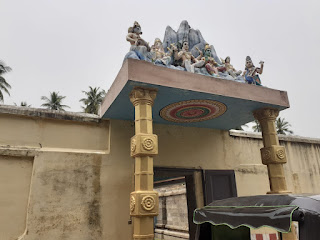
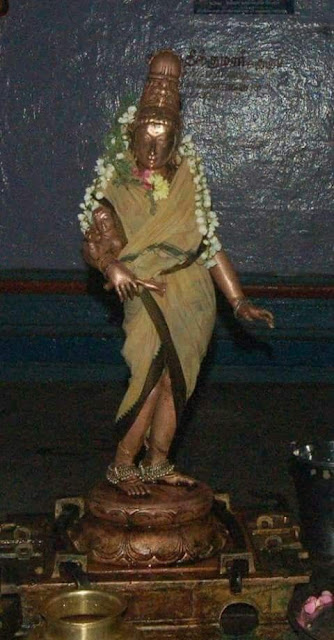
Valikeshwara Shiva temple of Batlagundu


Our country is gifted with a number of small and large temples of great antiquity. One such shrine which is very small temple but has a great history behind it is the Valikeshwara Shiva temple of Batalagundu.

It is located on the banks of Vegavati river (nowadays called Vaigai) near the town of Batalagundu, enroute Kodaikanal. It has all the aspects of a perfect Shiva temple - located away from the town, near a river and near a cremation ground on a slightly hilly terrain.


This temple is known for the Varuna japam puja which is conducted till date. This is a puja to pray to the lord for copious rains during drought or insufficent rains. Continous abhishekam is performed to the Shiva linga with water till the end of the japam. There are various rules for performing Varuna japam such as avoiding food with salt on the days of the japa.

This is a first hand experience of a person who witnessed the Varuna japam performed in 1930s - 40s  in this temple and we have given a verbatium translation - " In those days, agriculture was more important than what it is today. Whenever there was a drought or lesser than usual rains, the village elders would decide on doing the Varuna japam along with Rudram chanting. They would fast and come to the temple to start the pujas. One set of people will be performing the abhishekam to Shiva and another group would go the nearby Vaigai river and stand inside the water till their neck. It must be noted that in those times even when the rains were not enough there was never a time the river went dry. It was before the construction of the dam across vaigai (~1960). Standing inside the river waters the varuna japam would commence. It would go on for several hours. Finally after pujas completion, prasadam was served to all. The ghee flowing from the sweet pongal prasadam would make the entire hand oily. Then they would start returning back to their homes by walk and it would be closer to evening. Batlagundu village (or today's town) was nearly 5-6 kms away. Here is where the fun starts. The moment they step out of the area, rains would start. It was an custom not to use any umbrella or any other things which would prevent the rain water from falling on them. If they used an umbrella then the rains would stop. The rains would continue till late in the night."

It was the strong faith of our ancestors on the grace of Lord Shiva that such a thing could happen those days.


Initially, there was only a shrine for Lord Shiva. Recently, shrines for Ambaal and Lord Subramanya have been added. This temple is open only on Monday mornings and that too for only few hours due to the remote location of the temple.


Gajasamharamurti of Vazhuvoor


        Tamil Nadu has many unique groups of temples dedicated to various groups of deities. Among such groups dedicated to Lord Siva are the “Ashta Veera Sthanams” or “Atta Veerattanams” as they are commonly known. These eight temples are known as “Veera Sthanams” or sites of valour because Lord Siva is believed to have performed one valorous feat in each of these sthalams:

1.      Thirukkovilur – Andhakasura-vadha-murti – slaying the demon Andhaka

2.      Thiruvadhigai – Tripurantakamurti – destroying the three cities of three asuras

3.      Korukkai – Kamadahanamurti – burning Kamadeva or Manmatha with his third eye

4.      Kandiyur – Brahma-shirashchhedaka-murti – cutting of Brahma’s fifth head as Bhairava

5.      Thirukkadaiyur – Kalasamharamurti – saving Markandeya from Kala or Yama

6.      Thiruppariyalur – Virabhadra – destroying Daksha’s yajna

7.      Vazhuvur – Gajasamharamurti – slaying the rogue elephant

8.      Thiruvirkudi – Jalandhara-vadha-murti – slaying the asura Jalandhara

The Veeratteshwarar temple in Vazhuvoor, a village in the Kuthalam taluk of Mayiladuthurai district of Tamil Nadu, is believed to be the site where Lord Siva killed Gajasura, the elephant demon, and wore his hide as a shawl.

The Rudra Samhita of the Siva Mahapurana contains an account of the story of Gajasura’s defeat at the hands of Lord Siva (Section 5 - Yuddha Khanda, Chapter 57). Gajasura was the son of Mahishasura who was killed by Goddess Durga as Mahishasuramardini. Wanting to take revenge for his father’s death, Gajasura did severe penance to propitiate Lord Brahma and obtained a boon from the creator god, “I shall not be killed by any man or woman who is overwhelmed by kama or lust.” As is the case with most asuras of yore, Gajasura began to terrorise all the worlds, and made his way to the city of Kashi, the capital city of Lord Siva. All the devas sought refuge in the Three-Eyed Lord who proceeded to Kashi to vanquish Gajasura and protect his devotees. After a long and terrible battle, the Lord who had burned Kama pierced Gajasura with his trisula, thus fulfilling the criterion of the demon’s boon. Realising his folly, Gajasura propitiated Lord Siva before giving up his life and asked for two boons –

यदि प्रसन्नो दिग्वासस्तदा दित्यं वसान मे।।

इमां कृत्तिं महेशान त्वत्त्रिशूलाग्निपाविताम् ।।५८।।

yadi prasanno Digvāsas-tadā dityam vasāna me

imām kṛttim Maheśāna tvat-triśūlāgni-pāvitām (verse 58)

Oh Sky-Clad Lord! Oh Maheśāna! If it pleases you, please wear this hide of mine which has been purified by the fire of your trident.


अन्यं च मे वरं देहि यदि तुष्टोऽसि शंकर ।।

नामास्तु कृत्तिवासास्ते प्रारभ्याद्यतनं दिनम् ।।६३।।

anyam ca me varam dehi yadi tuṣṭo`si Śaṅkara

nāmāstu Kṛttivāsāste prārabhyādyatanam dinam (verse 63)

Oh Śaṅkara! If you are pleased, grant me one more boon. From this day onwards, may you be known by the name Kṛttivāsa, one who wears the (elephant) hide.

Thenceforth, the Krittivaseshwara temple became one of the most important temples of Shiva in Kashi.

The Kurma Purana (Purvabhaga, chapter 32) has a slightly different version of the legend. Once, a daitya in the form of an elephant came to Varanasi and began to harass the sages who were performing penance and worshipping the Sivalinga. Lord Siva at once emerged out of the linga, killed the demon, tore his hide and wore it as a garment. Thus, he came to be known as Krittivaseshwara.

According to the sthala purana of the Vazhuvoor Veeratteshwarar temple, the sages who inhabited Darukavana (the forest of Daruka trees) became arrogant due to their spiritual prowess. Wanting to destroy their ego, Lord Siva took on the form of a mendicant, accompanied by Lord Visnu taking on his enchanting female form of Mohini, and the two of them entered the forest. While Visnu as Mohini distracted the sages, their wives were charmed by the handsome mendicant who had arrived. However, the sages soon realized that they were being cheated. They fuelled a great sacrificial fire out of which arose a great rogue elephant. When it attacked, Lord Siva entered its body. Unable to stand the fire of his presence in its belly, the elephant quickly entered the sacred spring called Pancha Brahma Teertha. The Lord then tore out of the body of the elephant and draped its hide around himself. The elephant here represents the ego which is torn out and destroyed once Lord Siva enters one’s heart.


The road leading up to the gopuram
(Photo by author) 

It is believed that at the time of Pralaya (the great dissolution of the universe), the village of Vazhuvoor escaped unharmed (vazhuvudhal in Tamil means to slip away or escape) and hence came to be known as Vazhuvoor. The Veeratteshwarar temple in Vazhuvoor is the only temple dedicated to the Gajasamharamurti form of Lord Siva. This form is immortalised here as a beautiful 4-foot-high Chola bronze icon in a separate shrine, the largest and only one of its kind. Lord Siva as Gajasamharamurti stands with majestic ease on the head of the elephant. Out of his eight arms, two arms are holding up the hide of the elephant above his head. The two legs of the elephant are visible near the two hands holding up the skin, as well as the tail. The hide itself becomes the prabhamandala or tiruvaasi (ring of flames) surrounding the Lord. His other arms hold various weapons and objects such as a trisula (trident), kapaala (skull bowl), khadga and khetaka (sword and shield), and a snake. He stands with his left knee bent and lifted high. The fact that the sole of the lifted foot is visible in front as a result of the graceful twist of the torso is a testament to the skill and expertise of the Chola sculptor.


The majestic Gajasamharamurti of Vazhuvoor 


Next to the Lord is another beautiful bronze icon of Devi Parvati carrying her infant son Muruga or Karttikeya on her waist. She stands with her feet turned away from Lord Siva as if she is about to walk away, but her face is turned to look up at her husband in awe and fear at his terrible yet wonderous feat. The little Murugan on her waist is turned towards his father with one hand pointing to him. It is believed when Lord Siva did not emerge out of the elephant, Parvati became worried and dejected and began to turn away when young Muruga suddenly pointed and cried out that his father had torn through the elephant’s body and come out. This has been skilfully depicted in bronze here. Together, the bronze icons of this divine family is an awe-inspiring sight to behold.


Devi Parvati with the little Muruga on her right waist

Apart from the bronzes of Gajasamharamurti and Parvati Devi, other icons include those of Lord Siva as Bhikshatana (the mendicant) and Lord Vishnu as Mohini. The Sivalinga (moolavar) in this temple is a svayambhu lingam. The goddess is known as Balankurambikai or Ilankilai Nayaki. The mandapam or hall where the shrine of Gajasamharamurti is housed is known as Jnana Sabha. The teertha (sacred water source) here comprises of five wells and is hence known as Panchamukha Teertha or Panchabrahma Teertha. Usually the shrine for Nandi is followed directly by the shrine of Lord Siva. However in this temple, the temple tank lies between the Nandi shrine and the main shrine.


The temple tank with the gopuram
(photo by author)

Gajasamharamurti and Parvati with Muruga are the utsavamurtis of the temple. It is believed that the killing of the rogue elephant took place on the day of Maasi Magha (February-March), hence the Gaja-samhara is celebrated on that day every year when the utsavamurtis are brought out in procession.

Vazhuvoor is a very significant place in the field of Indian classical dance, and Bharatanatyam in particular. Among the major baanis or sub-styles in Bharatanatyam, “Natya Kala Kesari” Guru Vazhuvoor B. Ramaiah Pillai (1910-1991) was the fountainhead of the Vazhuvoor baani of Bharatanatyam. Till date, practitioners of this substyle begin their dance recitals with the traditional todayam or invocatory song of the Vazhuvoor Gajasamharamurti temple.

ஜயசுத்தபுரிவாஸ ஜயமஹாஞானசபேச

ஜயகஜசம்ஹாரேசஜயக்ருத்திவாஸேசஜயஜய

ஶ்ரீக்ருத்திவாஸேச்வரருக்கு ஜயமங்களம்

ஶ்ரீ பாலாங்குரம்பிகைக்கு சுபமங்களம்

பஞ்சப்ரஹ்மதீர்தகர்தருக்கு நித்யமங்களம்

பக்தசுவாமிநாதனுக்கு க்ருபைசெய்யநித்யமங்களம்

jaya śuddhapurivāsa jaya mahājñānasabheśa

jaya Gajasamhāreśa jaya Kṛttivāseśa jaya jaya

Śrī Kṛttivāseśvararukku jaya maṅgaḷam

Śrī Bālāṅkurambikaikku śubha maṅgaḷam

Pañcabrahmatīrthakartarukku nitya maṅgaḷam

Bhakta Svāmināthanukku kṛpai seyya nitya maṅgaḷam


        A rendition of this todayam by Guru Vazhuvoor R. Samraj (son of Guru Vazhuvoor Ramaiah Pillai) and the Bombay Sisters is there at the beginning of this YouTube video. 

          A most wonderful video of the utsavamurtis of the Vazhuvoor temple in procession is available on YouTube.


References:

The Śiva Purāṇa Part 2, transl. by J. L. Shastri. Motilal Banarsidass. Delhi. 2002.

Śiva Purāṇa (original Sanskrit) – Wikisource

The Kūrma Purāṇa Part 1. Motilal Banarsidass. Delhi. 1998.

Kūrma Purāṇa (original Sanskrit) – Wikisource

Vazhuvoor Veeratteshwarar sthala puranam – Shaivam.org


Thirunedungalam - Shri Nedungalanathar Shiva Temple

 Thirunedungalam - Shri Nedungalanathar Shiva Temple

We all must have read many of our “Stotra granthas” i.e Soundarya Lahari, Shivananda Lahari and Lalitha Sahasranamam etc. However, when we go to any temple, Would we anytime interpret some slokas or names of “Sahasranamas” with the presiding deities of the particular temple and get mesmerized.  The answer may be yes/no depending upon individual person. Now, let us go to one temple which is situated amid of paddy fields in small village but being a testimony to the various names of Lalitha Sahasranamam.

The temple is “Thirunedungalam Shri Nedungalanathar Temple”.

Thirunedungalam temple entrance


Location:

This temple is in Trichy district, Tamilnadu and 21KM from Trichy.

There is place called Thuvakkudi in Trichy to Thanjavur route 17 KM from Trichy and There is separate route on left side from Thuvakkudi and Thirunedungalam is being at 4th KM in that route.

On the other route, it is 42 KM away from Thanjavur.

There are buses available from Trichy Chathram bus station towards Maangavanam and these buses are used to go through Thirunedungalam. The best option is to arrange private cabs from Trichy and covers these area and devotees can have dharshan of another temple nearby i.e Thiruverumbur,

Significance of the Temple:

  • This temple is one among the 275 temples mentioned in Tamil devotional literature called Tevaram.
  • An ardent devotee and Tamil Sage Thirugnanasambandar came to this temple on 7th century and praised the deity in 10 beautiful verses in Tamil and the same is being currently called as “Idar Kalaiyum Pathigam in Tamil”. It means, the 10 verses are capable of eradicating all difficulties of an individual who recites it.
  • These ten verses of Thirugnanasambandar predominantly speaks about various incidents from Puranas of Mahadeva and the devotee the one who always remembers the same will eventually overcome all the obstacles due to the blessings of Thirunedungalam Shri Nedungalanathar
  • The great sage among all sages Agasthiyar came to this temple and established a well and worshipped Nedungalanathar and The respective well is still there in the temple and being called in the name of “Agasthiya teertham”
  • Since the mahadeva blessed the Chozha king with his wedding dharshan, Shri Nedungalanathar is also being called as “Nithya Sundareshwarar”.
  • There are around 50 inscriptions in this temple complex from Pallava dynasty to, Chozhas, Pandyas and till Vijayanagara kingdoms. The walls of inner Prakara richly possess the inscriptions of the Uttama chozha, great Raja Raja Chozha 1, Rajendra Chozha 1, Kulothunga I and Kulothunga III, Raja Raja III.
  • The inscriptions of Vijayanagara period denotes Thirunedungalam as a “Dakshina Kailash”.
  • According to Raja Raja III period inscription, Thirunedungalam was being called as “Thiyagavallai Chaturvedimangalam - a brahmadeya”.
  • Almost all inscriptions speaks about various donations to temples for worship and construction of various parts of temples.
  • Interestingly, one inscription speaks about the construction worker named “Thambikkunallar” who had done construction as well as repair work several times at this temple and also mentions about subsequent endowment of land and house by king to him.
  • Every year on the mornings of 7th to 12th of Tamil month Aadi (July-August or Aashada) – Surya worships Shri Nedungalanathar through his rays.

Thirunedungalam temple inside


Dakshinamoorthy:

Dakshinamoorthy is unique in this temple, This particular posture is being called as “Rajalingasana Dkashinamoorthy” and it is one among the 64 forms of Mahadeva.

Rajalingasana Dakshinamoorthy – here he sits in “Siddhashanam” and bears “deer as well as “Mazhu”” in his upper arms and shows chinmudra in lower arm and bears “box of vibhuti (ash from cow dung)” in his lower left arm and encircled the left leg.

Thirunedungalam dakshinamoorthy


Shri Nedungalanathar and Lalitha Sahasranamam”

According to kshetra Mahatmyam of this temple, Godess Parvati is also being there along with Shri Nedungalanathar inside the “gharbhagriha (Sanctum)”.

Due to this, Shivalinga is being there bit left side after leaving space for Parvati and Shivalinga is not exactly at the centre of sanctum. However, we are unable to see the goddess inside here why??. Since here she is being “formless” or “Aroopam state”.

Since Goddess is also present inside the sanctum along with Shri Nedungalanathar, here the Shri Nedungalanathar is also being called as “Ardha- narishwar” and there are two Vimanams at the top of sanctum to denote the togetherness of Parvati and Mahadeva.

Hence, overall, Parvati is being in formless state and being with Shri Nedungalanathar at same sanctum.

Thirunedungalam Prakaram


Following are few of names from Lalitha Saharanamam which describes this unique nature of Parvati as she is being in Thirunedungalam and also about her unbreakable togetherness with Mahadeva.

Nirakara & Nirguna – Parvati who does not have any shape & Parvati who is beyond any charecterstics. In Thirunedungalam temple – Her formless or shapeless state and being beyond characterstics are testament to this two names as glorified in Lalitha Sahasranamam and also core to the Advaita vedanta’s definition of Parabrahma as established by Aadhi Shankaracharya.

Shiva-Sakthi-Aikya-rupini (शिवशक्तैक्यरूपिणी) – Parvati who is the union of Shiva and Sakthi into one form. Despite we have seen Parvati with Shiva in Ardhanareeshwara form as a unified form in various other temples, this particular state of goddess in Thirunedungalam is unique. Here Mahadeva is being in Shiva linga which is also “Sakala nishkala form (either form or formless)” and Parvati is being “Nirakara (formless)”.


Shri-KanThardha-Sareerini (श्रीकण्ठार्धशरीरिणी) – Parvati who possesses half of the body of ShrikanTha OR Parvati who is in the form of Ardhanarishwara – When we remember this name & connect this with Thirunedungalam sanctum, there is no further explanation required. Her state here is as same as this particular name glorified in Lalitha Sahasranamam.


Kaantaardha vigraha (कान्तार्धविग्रहा) – Parvati who is half the body of her husband – This name is as same as the above one. However, the small difference here is that, this name explicitly says that she is half of her husband and the meaning of the earlier name is that she is half of Mahadeva (Shri Kantan).


We might have done the “Parayanam” of Lalitha Sahasranamam many times. But when we come to this Temple at Thirunedungalam, we will be able to get amazed that how many of the unique names of Lalitha Sahasranamam are being alive here practically and this temple is really being a living testament to various names as mentioned in Lalitha Sahasranamam.


Source: “Ashtashta moorthangal” book in Tamil published by Narmada publication and written by Shri.R Ramakrishnan

https://sanskritdocuments.org/doc_devii/lalita1000.html

http://www.varalaaru.com/design/article.aspx?ArticleID=1399


Thirupudaimaruthur - Putarjuneshwarar Temple


There are three Shiva Temples with Arjuna Tree as a “Sthala-vruksham”. They are

  • Srisailam – Mallikarjuna Jyothirlinga Temple, Andhrapradesh
  • Thiruvidaimaruthur – Mahalinga Swamy Temple, Tamil nadu
  • Thirupudaimaruthur – Putarjuneshwar Temple, Ambasamudhram Taluk, Tirunelveli district, Tamil nadu.

Arjuna Tree:

It is called Marudha Maram in Tamil, Arjun in Hindi. In Sanskrit, Arjuna means either bright or white. The flowers of Arjuna tree are white in color

The significance of the Arjuna Tree are mentioned in various Ayurveda texts. Astanga Hridaya of Vagbhata explicitly speaks about the Arjuna tree. The below slokas are in Chapter 15 of Astanga Hridaya and This chapter deals with various herbs which are used in Panchakarma (Ayurveda treatmeents).

न्यग्रोधपिप्पलसदाफलरोध्रयुग्मं जम्बूद्वयार्जुनकपीतनसोमवल्काः प्लाक्षाम्रवञ्जुलप्रियालपलाशनन्दीकोलीकदम्बविरलामधुकं मधूकम्

Nyagrodha, Pippala, Sadaphala, the two Rohra, the two Jambu, Arjuna, Kapitana, Somavalka,

Plaksa, Amra, Vanjula, Piyata, Patasa, Nanon, kon, Kadamba, Virala, Madhuka and Madhuka-


नयग्रोधादिर्गणो व्रण्यः सङ्ग्राही भग्नसाधनः मेदः पित्तास्रतृड्दाहयोनिरोगनिर्बहणः

this nyarodhadi group is good for wounds/ ulcers, cause constipation, unites fractures, cures fat accumulation, bleeding disease, thirst, burning sensation, and diseases of Vagina. 41-42


The flowers, barks, leafs and fruits of Arjuna tree have the capability to cure the heart ailments, even it is being touted as a “Guardian of Heart”. Various Ayurveda texts including Charaka Samhita, Sushruta Samhita speaks about qualities as well as medicinal properties of Arjuna tree.

In this context, this Arjuna tree (Maruda vruksham) is being associated with three shiva temples as mentioned above. Out of this three temples, SriSailam temple in Andhra Pradesh is being the most famous one since it is one among 12 jyothirlinga kshetras and Thiruvidaimaruthur temples is also famous among Aasthikas but not to the extent of Srisailam. However, another Shiva Temple “Thirupudaimaruthur or Putarjuna kshetram in Sanskrit” is not that quite popular.

Thirupudaimaruthur – Kshetra Mahatmyam:

Brahma, Narayana, Mahalakshmi, Saraswati and all devas requested Mahadeva to show them the great place to worship him in Bharatavarsha. Mahadeva asked Brahma to throw his brahma dhanda into Ganga and Asked all devas to follow the Brahma dhanda and where it stops, the respective place would be the one which all devas aspired.

Thirupudaimaruthur Temple Entrance


Similarly, the brahma dhanda reached the merging point of “Tamraparni river and Sea” and then it traveled against the flow of Tamraparni river towards western side and stopped at the sangham point of “Tamraparni river with its tributary Kadana river”. In this place, all devas along with Brahma and Narayana established the Shiva linga and worshipped it along with brahma dhanda. The same Brahma dhanda can be even seen now in front of goddess ‘Gomathi ambal” sanctum.

This particular shiva linga later submerged into the sand. After long time, the local pandya king came to the banks of Tamraparni river while chasing a deer. The respective deer went downwards of the “arjuna tree” and While chasing it, the king located the Shiva linga and re-established it with full grandeur in a newly constructed temple. The downside part of arjuna tree where the deer disappeared can be even seen today on the back side of the temple near the shrine of Ganesha.

From Tamraparni Mahatmyam:

Following are excerpts from the Tamraparni Mahatmyam,

When the Sage among Sages Agasthya the one who brought the Tamraparni river along with him during his Dhakshina Bharata yatra, came to this kshetra along with his wife Lopamudra, When he entered this kshetra, he reached the eternal happiness and following are his expression while had a dharshan of this Maha kshetram Thirupudaimaruthur

“Agasthya Maharishi saw the The shiva linga which was there inside “Arjuna tree (Marudha tree)” – The one which possess the Brahmananda, Tapopala (the desired results through penance) of Agasthya, the nectar drop emerged from the ocean”.

Aadhi Manu and Thirupudaimaruthur:

As per the guidance of Agasthya, Aadhi manu the one who is the first “manushya” as per our Puranas intent to worship all the “Swayambu linga ksthetras on earth” and reached Thirupudaimaruthur. While reaching, he had seen that Mahalakshmi, Saraswati and all devas near the Arjuna tree on the banks of Tamraparni river and while he came near, they all had disappeared in the tree and he took his knife and tried to cut the tree. But due to divine intervention, he realised the presence of Mahadeva and built the temple and later the temple built by Manu turned ruins.


Thirupudaimaruthur Temple History


Devendra and Brahma hathi dosha”

Another important aspect associated with all these three shiva temples which are associated with “Arjuna tree” is its ability to wash away the “Brahma hathi dosha”.

In Thirupudaimaruthur, Devendra got relieved from Brahma hathi dosha after taking punya Snanam in Tamraparni & Kadana river sagham point and after worshipping “Putarjuneshwar”. Devendra got this Brahma hathi dosha since he killed his guru “Vrudhrasura” who was deva guru for brief period of time and this particular remedy told by Brahspathi to Indra.

Indra came to this Thirupudaimaruthur and took punya Snanam in “Tamil month – Thai & Pusya Nakshatram and Guru horai” and got relieved from his Brahma hathi dosha.

This particular incident is still even today being celebrated as a festivel in “Tamil month – Thai Pusya star day” as a “Tirthavari utsav. In this particular day, Utsav murthy of Putarjuneshwar comes to “Tamraparni river” bank in “Rishibha vahanam” and give dharshan to Indra’

Karuvur Chithar & Thirupudaimaruthur:

An ardent devotee of Shiva – Karuvur Chithar the one who was associated with the greatest king of Bharata varsha from Tamilnadu “Raja Raja Chola” came to the northern bank of Tamraparni river but he was unable to cross the river due to heavy floods. Due to his plead to mahadeva, Putarjuneshwar asked him to cross the river with the focused meditation on him. Similarly, Karuvur chithar crossed the river and had a dharshan of Putarjuneshwar.

Since Putarjuneshwar heard the pleading of Karuvur chithar, the shiva linga bit tilted on its left side and we can have a dharshan with the same tilted posture even today.

Thiruupudaimaruthur Temple Prakaram


Significance of the Temple:

  • Here, Tamraparni river flows northern wards “as a Uttara vahini” and turns eastern “as a Poorva vahini” exactly at this place. Whereever, the river flows northwards, the respective places are considered equivalent to Kashi since Ganga turns northwards when it enters the ever holy maha kshetra kashi.
  • Tamraparni River - Thirupudaimaruthur
  •   In Thirupudaimaruthur, another tributary of Tamraparni “Kadana river” merges with Tamraparni along with antarvahini Saraswati”. Due to the sangham of three rivers, “the place located on northern bank of Tamraparni” is being called as “Mukkudal (tamil name for Triveni sangham”
  • Thirupudaimaruthur temple is one among the three temples which has “Arjuna tree / Marudha maram in Tamil as a sthala vruksham.
  • Thirupudaimaruthur temple and Tamraparni river are one among the most sacred places in Bharatavarsha which have the potential to wash away the most harmful “Brahma hathya dosha”.
  • The person who has the mental illness comes to the temple and worshipped for 21 days will get cured.
  • According the “Tamraparni Mahatmyam”, there are 11 tirthas situated in Tamraparni river around this Thirupudaimaruthur temple.
  • Narayana, Mahalakshmi, Brahma, Saraswati and All devas have worshipped here.
  • The greatest sage among all sages “Agasthya” came and worshipped here and had his punya snanam along with his wife Lopamudra

Significance of Various Tirthas of Thirupudaimaruthur:

All this below mentioned tirthas are situated in Tamraparni river only but in various locations in and around Thirupudaimaruthur and they are not separate kunds or wells but all are in Tamraparni river only, All of these tirthas and Significance are mentioned in Tamraparni Mahatmyam

  • On the southern side of Putarjuneshwar Temple, there is tirtha called Putarjuesha tirtha or Devendra moksha tirtha which was earlier washed away the sins of Devendra,
  • On further south, there is tirtha called “Gowthama Tirtha” and Agasthya rishi did Snanam in this tirtham along with his wife lopamudra and did the Tarpanas to Rishis and devas.
  • Bit further south, there is a tirtha called “Paisasamochana tirtha” and who does the Snanam here won’t see the place of yema and they will directly liberate from the birth and death cycle.
  • Bit further south, there is tirtha called “Dhanadapavanam” which does wash away all sins i.e mahapapas.
  • Further down south, there is Sangham place where Tamaraparni river merges with Kadana river and Antarvahini Saraswati and the one who does the Snanam here will attain all his dharmic desires.
  • Bit further south, there is tirtha called “Maandavya tirtha”  and the one who does the Snanam here will reach Brahmaloka
  • On northern side, there is tirtham called “Vinayaka tirtha” and the one who does the Snanam here will get longevity of life.
  • On further north side, there is tirtha called “Karma tirtha” and the one who touches this tirtha will get relieved from all his/her karma cycles.
  • There is one more Tirtha called “Rakshashi vimochana tirtha” and the one who just sees this tirtha, will get relived from all sins.


Temple Architecture:

  • At Garbhagriha, Putarjuneshwar is there with tilted posture
  • Yoga Dakshina moorthy is an another main attraction in this temple.
  • Gomathi ambal Garbhagriha is located in the southern side of Putarjuneshwar.
  • Apart from this, there are shrines for Subramanya, Nataraja, Sahasra lingam, Bhairav etc.
  • At the entrance, there is sculpture of Pandya king who built this amazing temple.

  • Thirupudaimaruthur Temple Inside


Main Festivals

There is annual 10 days festival celebrated in Tamil month “Thai” ( in January / February) and the tenth day usually falls on Pushya nakshatra day. There will be “Tirthavari (the deity will come to Tamraparni river)” on this tenth day. This is the most significant annual festival and it related to temple’s kshetra mahatmiyam. There will be floating festival happening on this tenth day night and it is being called “Tepothsavam” in Tamil.

Apart from this, Maha shivratri, Aarudhra dharshan in December / January month, Poornima day in Krithika month are also being celebrated grandly.

Recently, Tamraparni Pushkaram was celebrated with full grandeur by all aasthikas.

Location:

Thirupudaimaruthur is a small village on the banks of Tamraparni river. It is in Ambasamudhram Taluk and Tirunelveli district and fully surrounded by Paddy fields and enriched forever by Tamraparni river.

It is located 28KM from Tirunelveli on western side. There are regular buses from Tirunelveli to Papanasam and the devlotees have to get down at the town called Veeravanallur and there are autos/ taxis available to Thirupudaimaruthur which is around 8KM from Veeravanallur. Devotees can also book private vehicle from Tirunelveli and which is the most convenient way.

Other Places to look around

  • This temple is situated along with other “Nava kailsha” temple.
  • Hence, when the devotees do the yatra to “Nava kailasha” temples, they can go to Thirupudaimaruthur also.
  • Gajendra moksha kshetram is very near to this temple.
  • Also, Brahmadesam which has one of the oldest shiva temple and the place where second guru of Kanchi kamakoti peetam got birth is also very near to this temple i.e around 8KM.


Temple Timing:

Temple is open for dharshan from morning 6:00 AM to 11:00 AM and evening 4:00 AM to 8:00 AM


Source: Tamraparni Mahatmyam Book, 

https://www.ayurvedatreatments.co.in/ayurvedatreatments/index.php/e-book-downloads


Kurukshetra: The land of virtue

The holy land of Kurukshetra finds mention within the Mahabharata narrative as the battlefield of the famous Kurukshetra war between the armies of the Pandavas and Kauravas. Located between two rivers Saraswati and Drishadwati, the land is named after King Kuru, the ancestors of the Pandavas and Kauravas.

Also referred to as Dharmakshetra or 'the land of virtue', it holds high esteem as being a place where dharma reigns supreme. King Dhritarashtra refers to Kurukshetra as 'Dharmakshetra' in the very first verse of the Bhagavad Gita:

धर्मक्षेत्रे कुरुक्षेत्रे समवेता युयुत्सवः |
मामकाः पाण्डवाश्चैव किमकुर्वत सञ्जय ||

O Sanjaya, after gathering on the holy field of Kurukshetra to fight, what did my sons and the sons of Pandu do?

The Vamana Purana states that in the days of yore, King Kuru chose the land adjacent to the Saraswati river to embed the eight virtues of spirituality: austerity (Tapas), truth (Satya), forgiveness (Kshama), kindness (Daya), purity (Shuddha), charity (Daana), devotion (Yajna), and conduct (Brahmacharya). Being pleased with his endeavor in this regard, Mahavishnu blessed that the land will forever be known as a Holy land and dubbed it as Kurukshetra, The land of Kuru and further decreed that anyone dying in this holy land will go to heaven.

It comes as no surprise that this sacred land embedded with the eight virtues/dharma was chosen to be the battlefield of the Pandavas and Kauravas, which symbolically represents the battle between dharma and adharma and quite fitting that the divine discourse of the Bhagavad Gita, in which the lord seeks to remind Arjuna of his Kshatriya dharma also takes place in the aptly named Dharmakshetra.

Located in modern day Haryana, in the entrance to the town of Kurukshetra, one is greeted by a sculpture of Lord Krishna driving the chariot of Arjuna, a classic depiction of the Kurukshetra war and of the Bhagavad Gita.


Kurukshetra and the nearby town of Thanesar taken together, forms an important pilgrimage site with many significant locations attributed to the Mahabharata. Some of the major pilgrimage sites in and around Kurukshetra and Thanesar are:-

Brahma Sarovar: Every year lakhs of people come to take a holy bath at the Brahma Sarovar on the occasion of 'Somavati Amavasya' (Sacred No-Moon Day that happens on a Monday) and on solar eclipses. They believe that a bath in the holy Sarovar frees all sins and cycle of birth-death. It is one of Asia's largest man-made ponds.
Sannihit Sarovar: The pond is believed to be the meeting point of the seven sacred Saraswatis. The Sarovar, according to popular belief, contains sacred water and it is believed that bathing in the waters of the tank on the day of Amavasya (new moon) or on the day of an eclipse bestows blessings equivalent to performing the Ashvamedha Yajna.
Sthaneshwar Mahadev temple: A temple dedicated to Lord Shiva, it is believed that here the Pandavas and Lord Krishna worshipped Lord Shiva to get His blessings for victory in the Kurukshetra war.
Jyotisar: The famous site where the Bhagavad Gita was expounded to Arjuna under the holy banyan tree.
Bhishmakund: The spot where Arjuna pierced the ground to bring forth a spring of water to quench Bhishma's thirst as he was lying on the bed of arrows. 

As the famous saying in sanskrit goes:

धर्मो रक्षति रक्षितः
Those who protect dharma, are protected by dharma.

Thus the sacred land of Kurukshetra, a personification of dharma in and of itself will indeed protect all those who visit the holy land and instill faith, devotion and righteousness in every devotee's heart.

Therapeutic Shiva temple of Nanjangud, Karnataka

Our great country has no dearth of temples of great power and renown. One among many such temples is The Srikanteshwara temple of Nanjangud, located in the Mysore district of Karnataka. 
Dedicated to the Supreme Lord Shiva, this temple is also known as Nanjundeshwara, which in the local language of Kannada, translates to: 'The Lord who drank poison' and it is from here that the name of the temple town of Nanjangud is also derived.


Located in the heart of the temple town, on the right bank of the river Kapila, a tributary of the Cauvery river, the beauty of the temple is unparalleled. With devotees thronging in thousands every year, the temple town of Nanjangud is aptly titled 'Dakshina Kashi' or the Kashi of the South.

As detailed in the Sthala Purana, Rishi Parashurama who had incurred the sin of matricide at the command of his father, set out to perform penance. He came upon the banks of the Kapila river and becoming enamored by the beautiful scenery, decided to stay there and perform penance for a few days. Since the place was overgrown by creepers and bushes, he set about cutting them down with his axe. Suddenly a stream of blood spurted out from the place and covered his axe as well as himself. As he became agitated and reflected on what it may be, suddenly the Lord Shiva manifested Himself in his Linga form. Rishi Parashurama was overwhelmed with remorse that he, who had set out to expiate his sin against matricide has further committed a heinous act against the Supreme Lord Himself. Full of remorse, Rishi Parashurama intended to cut off his own head with his axe but Lord Shiva, full of divine mercy, manifested in front of him, stopped him and promised him His full protection. The Lord went on to say that He would always wear the mark caused upon His head by the blow of the axe, in the form of a crescent moon. The Supreme Lord Shiva further conferred that the clay soil of the locality around the Kapila river would have the power to heal all wounds no matter how severe and even have the power to stop the flow of blood. He further declared that if a temple was built there and devotees worshipped the Lord with faith and devotion, then all sins no matter how severe would be forgiven and the Lord's grace will be secured.

It is at this hallowed ground that the great Nanjundeshwara temple was built and is thronged by devotees, most especially those who wish to propitiate the Lord and gain His blessings in order to cure themselves of any ailments that they may be facing.

Yet another incident that further reinforces the healing properties of this sacred and divine place is one that took place many years back during the time of a Mohammedan ruler. 
This Mohammedan ruler wanted to test the power of Lord Nanjundeshwara, and so he sent an elephant which was blind in both eyes in order to see if it could be cured. He vowed that if the elephant was cured of its blindness in both eyes within a stipulated time, that he would firmly believe in the power of the deity but if it did not, then he would demolish the temple! 
The elephant was made to bathe in the Kapila river every day and taken twelve times around the temple in circumambulation (Pradakshina).Further, its eyes were smeared with a paste of the clay soil around the temple and some sacred water (Tirtha) from the temple. At the end of the stipulated time, the covering of paste was removed and lo and behold, the elephant was cured of blindness and regained complete vision in both eyes!
The ruler's doubts vanished completely and he was so convinced of the power of the temple and of the deity within that he gave it the title of 'Hakim Nanjunda' (Doctor Nanjunda).


The great Adi Shankaracharya so beautifully describes about the Lord in the Vaidyanathashtakam:-

वाक् श्रोत्र नेत्राङ्घ्रि विहीनजन्तोः वाक्श्रोत्रनेत्रांघ्रिसुखप्रदाय ।
कुष्ठादिसर्वोन्नतरोगहन्त्रे श्रीवैद्यनाथाय नमः शिवाय ॥

My salutations to the Supreme Lord Shiva, Who is the greatest among physicians, who blesses those beings who have lost their speech, hearing, sight and ability to walk, and who provides cures for devastating diseases like leprosy.

As these incidents go to prove, it is evident that anyone who visits the Nanjundeshwara temple and worships the Lord with faith and devotion, will be cured of any ailment, malady and afflictions that may be affecting them and be blessed with the ever benign grace of the Supreme Lord Shiva.

Kakkassery Bhattadri - A Saint from Kerala.

 Kakkasseri Bhattadiri was a great saint who lived in Kerala in the 17th century. At that time, the areas around Kozhikode was ruled by Zamorin kings (Samoothripad). Annually, there used to be a debate on Vedas,Puranas,Theology and Ithihasas headed by the king. It was caled as Pattathaanam which extended for a period of 7 days. It started on the Malayalam month of Thula on the Revathy star and hence it was called Revathy Pattathaanam. Pattathaanams were held regularly till Tipu Sulthan's invasion of Malabar. But the last Pattathaanam was held in 1110 Malayalam year (1934 AD).Most of the time, debates used to be conducted in the Tali Shiva Temple , which even today is managed by trustees from the Zamorin family.

The winners were rewarded in cash and kind, plus the fame of having won the debate in the Zamorin's Court. Namboothris from all over Kerala would assemble at Kozhikode for the intellectual contest.The subjects were divided into 108 topics and debates used to be conducted on each of them. 

Once a Tamil Brahmin by name of Uddhanda Sastri came to take part in this contest from Thondai Nadu (Present day Kanchipuram/Chennai region). Vainglorious, while he entered the court he would recite the following couplet:

Palaayadhwam palaayadhwam, re re dushkavi kunjara|
vedaanta vanasanchaaree, hyayaathyuddanda kesari.||

Run and hide, run and hide, ye elephants of bad poetry|
The roamer of vedanta forest, uddhanda, the Lion is coming.||


He won over the debates with the Namboothris for several years in a row. The king was so pleased with the knowledge of this Scholar, he appointed him as his Chief Courtier. In those days the Scholars were held in high esteem and as a mark of respect, the Zamorin would prostrate before the scholars in the presence of assemblage. This irked the Namboodthris no end and they conspired to defeat Uddhanda Sastri. Unfortunately, none in their group had the knowledge to equal the Sastri and defeat him in a fair contest.

 Birth 

They decided to invoke spiritual blessings to defeat Shastri.They identified a pregnant woman,masterminded a course of austerity and spiritual disciplines, sitting around her and making her the incumbent of the spiritual grace. Selected chants and invocations were made. Havans were performed. The expectant woman took her part in all this by partaking of the Yajna prasada every day. Specifically, they invoked Bala Tripurasundari of Sri Vidhya tradition, who is considered as deity which blesses one with abundant power of speech. They would perform Japa and give the sanctified butter to the woman. Finally a son was born - Kakkassery Bhattathiri

When he was three years old, his father died. As part of the tradition, one of the rituals for the departed involved making rice balls and invoking the departed ancestors. The belief is that the ancestors will take the form of crows and eat it. Normally the crows come down and eat the rice balls completing their part of the ritual. This is done for over a period of days, where the crows are invoked to have the rice balls. It is said that Bhattathiri used to identify each crow from other and could tell, which crow came the previous day and which didn't. Due to his remarkable power of observation, which became evident with identification crows, he was called Kakkasseri. " Kaakka " meaning crow in Malayalam.

He learnt to read and write by 3 years. When he was 5 years, he started to acquire the knowledge of vedas. He grew up revealing exceptional notes of intelligence right from very early age.Legend are that he was trained by none other than the great Uddanda shastri himself. The boy had hardly grown up to be an adult when the same Uddanda Sastri was held by him in a direct debate arranged by the elderly folk.

Debates with Uddana Shastri

During the first debates, Shastri in his colourful and commanding attire saw his opponent, not more than a boy. he declared that as it is only a small boy he will not argue with the boy, but his parrot will. Saying this, he brought out his parrot. Equally smiling Kakkasery brought out a cat he has brought saying that his cat will talk to the parrot. Seeing the cat the parrot got frightened and hid itself in the cage.

In another debate, at the Zamorin's Court, when the boy entered:
"Aakaro hraswa:"
accosted the Sastri, seeing the puny boy, which would mean that you are "short in stature".
"Nahi, nahiaakaro deerkha:", was the instantaneous retort, "Akaro hraswa:"
No, (the letter) 'aa' is long ; 'a' is short.

Sastri was dumbfounded by this quick repartee, even before the start of the debate, because it implied that the acclaimed scholar did not even know the basic alphabets.

Then came another."Tava mata pativrataa ?" (Meaning - Is your mother a devoted wife to your father? ).It was considered impossible to answer this question without impugning the honour of one's mother.But the boy was neither embarrassed nor worried. He boldly contradicted it, thus revealing his profound knowledge of Vedic marriage rites.In all South Indian Marriages, the twentyfifth Vedic ritual is Agni or holy fire ritual. This mantra from the Rg Veda is recited by the groom after doing prostrations to the fire.

“Nahi,Nahi," he said, "Soma was her first , Gandharva, the next, Agni, the third and the one born of man (his father) was the fourth (Rig. Veda Vill, iii, 27.5)

"You (the bride) was taken care by Soma (the moon) in the beginning . The Gandharva had take care of you afterwards from him. Then the Gandharva gave you to Agni. That Agni is now giving you to me along with wealth. After being taken care by all these Gods, I am the first human being to have her. So because Soma, Gandharva and Agni have already given her wealth and capacity to have children, me and this woman will have all the good fortunes in this world." The mantra must not be directly interpreted. The symbolism is that God takes care of our need through these deities right from our birth and we need to be thankful to them. Uddhanda Shastri was thrilled and hugged the young scholar in joy.

The debates ran for 7 days. During the debate, the king tries to save Uddanda by saying the debate was a tie and proposed another debate for the next day with the context - whoever gives the maximum number of explanations of the first stanza of Kalidasa's Raghuvamsamsa would win the debate. Uddanda shastri was an expert in Raghuvamsamsa and the king thought he would suitably win. But when Uddanda shastri gave 4 explanations, Kakkashery gave 8.

On the final day he is acknowledged by one and all including the King himself. There have been several debates later also between Uddanda shastri and Kakkasseri, but Kakkasseri wins all of them. In the meanwhile, Kakkassery also wrote a sankrit play vasumathi-manavikrama about the king and his family.

Later Years and self Realization

During the later days of his life, Kakkassery stopped going to temple( Mookuthala Bhagavathy temple in Mallapuram district) or even perform the nithyakarmas.

"How am I to worship the sandya?" Kakkassery questioned the Namboodris, who asked him for the reason for non performing the Sandya.
"Hridakase chidaditya:
sadabhati niramaayam,
Udayasthamanow nastha
katham sandyam upasmahey?"

"The sun does't rise or set in my heart. When the cosmic consciousness shines in my heart througout, with no rising or setting, how am I to worship sandya?'

It was said that he led a nomadic and spiritual life travelling from place to place. He is used to make the annual visit at the Thali temple for the regular Pattathanam. On one such occasion, he advised the gathered Brahmins and scholars to worship the Bhagavathi (Devi) at the time of distress. Taking his advice, the gathered Brahmins conducted an intense yagnja for 41 days to please the Devi. On the 41st day, Kakkassery visited the temple and asked for drinking water. After having the water, he left, and nobody has ever seen him again. So, there are no records of his later years.